
Professur für Psychologie der Kreativität und Innovation, Innovationsmanagement, Interkulturelles Management, Forschungsmethoden
Google H-Index
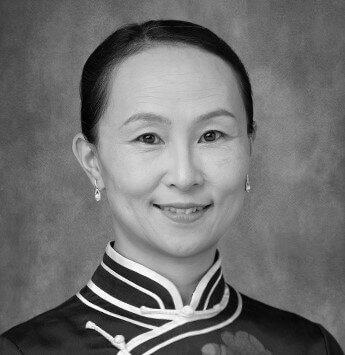
Prof. Dr. Lisa Min Tang
Professorin für Psychologie der Kreativität, Innovationsmanagement, Internationales Management
E-Mail: min.tang@hochschule-schaffhausen.ch
Prof. Dr. Lisa Min Tang
| Akademischer Werdegang | |
| seit 2021 | Affiliierte Professorin für Psychologie der Kreativität, Innovationsmanagement und Internationales Management am Hochschulinstitut Schaffhausen, Schweiz |
| seit 2017 | Leiterin, Institute for Creativity & Innovation, Hochschule für angewandtes Management, Deutschland |
| seit 2013 | Professorin in interkulturelles Management, Hochschule für angewandtes Management (HAM), Deutschland |
| seit 2013 | Hochschule für angewandtes Management, Ismaning, Deutschland
Interkulturelles Management; Kommunikation, Präsentation & Visualisierung; Länderstudie China I; Länderstudie China II; Statistik; Forschungsmethoden und angewandte Statistik; Vertiefende Forschungsmethoden; Psychology of Creativity & Innovation (in Englisch); Innovation Management & Design Thinking (in Englisch) |
| 2013 | Projektleiterin für Kurzprogramme, IUNworld GmbH, München, Deutschland |
| 2012-2014 | Konfuzius-Institut München, Deutschland
Chinesische Sprache (B1-B2); Kommunikation mit Chinesen |
| 2014 | Hochschule für angewandtes Management, Ismaning, Deutschland
International summer school “Effective Management of Creativity & Innovation” (Erasmus Intensive Program) |
| 2013 | Hochschule für angewandtes Management, Ismaning, Deutschland
International summer school “Effective Management of Creativity & Innovation” (Erasmus Intensive Program) |
| 2011 | Beijing Normal University, Beijing, P. R. China
Summer school “Applied Creativity across Domains” Creative Problem Solving: I & II, Research Project: I & II |
| 2008-2011 | Wissenschaftliche Mitarbeiterin und Projektleiterin, Hochschule für angewandtes Management (HAM), Deutschland |
| 2006-2010 | Promotion zum Thema „China’s Young Inventors: A Systemic View of the Individual and Environmental Factors“ an der Ludwig-Maximilians-Universität, München, Deutschland
Abschluss: PhD in Psychologie und Pädagogik |
| 2006 | CEO Assistentin, TUI China Travel Co. Ltd., Beijing, V. R. China |
| 2003 – 2006 | Stellvertretende Direktorin der Abteilung für internationale Zusammenarbeit, School of Continuing Education & Teacher Training (SCETT), Beijing Normal University, Beijing, V. R. China |
| 2000-2003 | Masterstudium im internationalen Masterprogramm „Psychology of Excellence“ an der Ludwig-Maximilians-Universität, München, Deutschland Abschluss: M.A. in Psychologie und Pädagogik |
| 1998-2000 | Assistentin für interanationale Zusammenarbeit, Kunming Universität, Yunnan Provinz, V. R. China |
| 1994-1998 | Bachelorstudium an der Südwest-China Pädagogische Universität, Chongqing, V. R. China
Abschluss: B.A. in englische Sprachwissenschaft und Pädagogik |
| Mitgliedschaften | |
| seit 2023 | Vorstandsmitglied, International Society fort he Study of Creativity and Innovation (https://issci.online/) |
| seit 2019 | Wissenschaftlicher Berater für die Sino-German Entrepreneur Alliance (https://www.linkedin.com/company/sg-ea/) |
| seit 2019 | Wissenschaftlicher Berater für das Chinese-German Center for Technology & Innovation (http://cgc-ti.com/) |
| seit 2018 | Mitglied der Task Force für Indigenous Psychology, Division 32 “Society for Humanistic Psychology”, American Psychological Association (http://www.indigenouspsych.org) |
| seit 2016 | Mitglied der Division 10 “Psychology of Aesthetics, Creativity, and Arts”, American Psychological Association (http://www.div10.org/) |
| seit 2012 | Jury member of the International Exhibition for Ideas, Invention and Innovation (www.iena.de) |
Profil der Professur
- Innovation & Creativity
seit 2023 Vorstandsmitglied, International Society fort he Study of Creativity and Innovation (https://issci.online/)
seit 2019 Wissenschaftlicher Berater für die Sino-German Entrepreneur Alliance (https://www.linkedin.com/company/sg-ea/)
seit 2019 Wissenschaftlicher Berater für das Chinese-German Center for Technology & Innovation (http://cgc-ti.com/)
seit 2018 Mitglied der Task Force für Indigenous Psychology, Division 32 “Society for Humanistic Psychology”, American Psychological Association (http://www.indigenouspsych.org)
seit 2016 Mitglied der Division 10 “Psychology of Aesthetics, Creativity, and Arts”, American Psychological Association (http://www.div10.org/)
seit 2012 Jury member of the International Exhibition for Ideas, Invention and Innovation (www.iena.de)
Publikationen der Professur
Ivcevic, Z., Reiter-Palmon, R., Tang, M., & Grohman, M. (Eds.) (2024). Crises, creativity and innovation. Palgrave Macmillan. https://doi.org/10.1007/978-3-031-61782-9
Reiter-Palmon, R., Tang, M., & Ivcevic, Z. (2022). Creativity and innovation in times of crisis (COVID-19). Frontiers in Psychology (Research Topic in the form of an eBook). https://www.frontiersin.org/research-topics/13833/creativity-and-innovation-in-times-of-crisis-covid-19#articles
Maimone, F., Tang, M., & Sinclair, M. (2022). Cross-cultural and intercultural dimensions of creativity in workplace. Frontiers in Communication (Research Topic in the form of an eBook). https://www.frontiersin.org/research-topics/9082/cross-cultural-and-intercultural-dimensions-of-creativity-in-the-workplace#overview
Gutting, D., Tang, M., & Hofreiter, S. (2021) (Eds.). Innovation und Kreativität in Chinas Wirtschaft – Deutsch-chinesische Kooperationen: Grundwissen, Erfahrungen und Erkenntnisse [Innovation and creativity in China's economy – German-Chinese cooperation: basic knowledge, experiences and insights]. Springer Gabler. [Original: in German language].
Tang, M., & Werner, C. (2017) (Eds.). Handbook of the management of creativity and innovation: Theory and practice. Singapore: World Scientific Press.
Tang, M., Ivcevic, Z., Reiter-Palmon, R., & Grohman, M. (Eds.) (2024). How crises may relate to creativity and innovation? An introduction. In Z. Ivcevic, R. Reiter-Palmon, M. Tang, & M. Grohman (Eds.), Crises, creativity and innovation. Palgrave Macmillan. https://doi.org/10.1007/978-3-031-61782-9_1
Tang, M., Bai, X, & Hofreiter, S. (2023). Creative activities during the COVID-19 pandemic: Chinese and German observations. In D. D. Preiss, M. Singer & J. C. Kaufman (Eds.), Innovation, creativity and change across cultures (chap. 8, pp. 175-205). Palgrave Macmillan.
Tang, M., & Hofreiter, S. (2021). Creativity and innovation: The Chinese and German conceptions and approaches. In D. Gutting, M. Tang & S. Hofreiter (Eds.), Innovation und Kreativität in Chinas Wirtschaft – Deutsch-chinesische Kooperationen: Grundwissen, Erfahrungen und Erkenntnisse. [Innovation and creativity in China's economy – German-Chinese cooperation: basic knowledge, experiences and insights] (chap. 1, pp. 1-34). Springer Gabler.
Hu, W., Zhang X., & Tang, M. (2021). Enhancement of creativity across lifespan in mainland China: Theoretical inquiries and practical examples in the new millennium. In S. W. Russ, J. D. Hoffmann & J. C. Kaufman (Eds.), Handbook of lifespan development of creativity (chap. 13, pp. 278-304). Cambridge University Press.
Tang, M., & Schmidt, J. (2020). Fostering creativity in interdisciplinary and intercultural teams: The importance of team building and team management. In A. McKay, R. Reiter-Palmon & J. C. Kaufman (Eds.), Creative success in teams (chap. 4, pp. 55-79). Academic Press.
Tang, M. (2020). Interdisciplinarity and creativity. In M. Runco & S. Pritzker (Eds.), Encyclopedia of creativity (3rd Ed.) (pp. 678-684). Elsevier.
Tang, M., & Moser, M. (2019). Nomination of domestic and overseas creative celebrities: The German style and the factors behind it. In I. Lebuda & V. Glaveanu (Eds.), Palgrave handbook of social creativity research (Chap 19, pp. 297-315). London: Palgrave Macmillan UK.
Tang, M. (2017). Creativity and innovation: Basic concepts and approaches. In M. Tang & C. H. Werner (Eds.), Handbook of the management of creativity and innovation: Theory and practice (Chap. 1, pp. 3-32). Singapore: World Scientific Press.
Gruszka, A., & Tang, M. (2017). The 4P's Creativity Model and its application in different fields. In M. Tang & C. H. Werner (Eds.), Handbook of the management of creativity and innovation: Theory and practice (Chap. 3, pp. 51 -71). Singapore: World Scientific Press.
Werner, C. H., & Tang, M. (2017). Essentials of the management of creativity and innovation in education, business, and engineering. In M. Tang & C. H. Werner (Eds.), Handbook of the management of creativity and innovation: Theory and practice (Chap. 18, pp. 347-364). Singapore: World Scientific Press.
Tang, M., Hu, W., & Zhang, H. (2017). Creative self-efficacy from the Chinese perspective: Review of studies in Mainland China, Hong Kong, Taiwan and Singapore. In M. Karwowski & J. C. Kaufman (Eds.), The creative self: How our beliefs, self-efficacy, mindset, and identity impact our creativity (Chap. 13, pp. 237-257). Philadelphia, PA: Elsevier.
Corazza, G. E., Agnoli, S., Artigau, A. J., Beghetto, R. A., Bonnardel, N., Coletto, I., Faiella, A., Gerardini, K., Gilhooly, K., Glăveanu, V., Hanson, M. H., Kapoor, H., Kaufman, J. C., Kenett, Y. N., Kharkhurin, A. V., Luchini, S. A., Mangion, M., Mirabile, M., Obialo, F.-K., Phelps, C., Reiter-Palmon, R., Puryear, J. S., Sarcinella, E. D., Tang, M., Vavassori, G. M., Vinchon, F., Viskontas, Indre, Weiss, S., Zbainos, D., & Lubart, T. (2025). Cyber-creativity: A decalogue of challenges. Journal of Intelligence, 13(8), 103. https://doi.org/10.3390/jintelligence13080103
Tang, M., Schmidt, J. T., Maisch, B., & Rueda, A. (2025). Exploring entrepreneurial possibilities through experiential learning and networking: Evaluation and implications of the SCE Incoming Week. Possibility Studies & Society. https://doi.org/10.1177/27538699251382702
Tang, M., Hofreiter, S., Werner, C. H., Zielińska, A., & Karwowski, M. (2024). "Who" is the best creative thinking partner? An experimental investigation of human-human, human-internet and human-AI co-creation. Journal of Creative Behavior. Advance online publication. https://doi.org/10.1002/jocb.1519
Tang, M., Reiter-Palmon, R., & Ivcevic, Z. (2022). Editorial: Creativity and innovation in times of crisis (COVID-19). Frontiers in Psychology, 13:858907. DOI: 10.3389/fpsyg.2022.858907
Hofreiter, S., & Tang, M. (2022). Kann China kreativ und innovativ? Warum es sich lohnt für Kreativität und Innovation nach China zu blicken [Can China be creative and innovative? Why it's worth looking to China for creativity and innovation]. Zeitschrift für Weiterbildung, 3/2022, 34-36. (Published in German)
Tang, M., Hofreiter, S., Reiter-Palmon, R., Bai, X., & Murugavel, V. (2021). Creativity as a means to well-being in times of COVID-19 pandemic: Results of a cross-cultural study. Frontiers in Psychology, 12:601389. DOI: 10.3389/fpsyg.2021.601389
Hofreiter, S., Zhou, X., Tang, M., Werner, C. H., & Kaufman, J. C. (2021). COVID-19 lockdown and creativity: Exploring the role of emotions and motivation on creative activities from the Chinese and German perspectives. Frontiers in Psychology, 12:617967. DOI: 10.3389/fpsyg.2021.617967
Katz-Buonincontro, J., Hass, R., Kettler, T., Tang, L. M., & Hu, W. (2020). Partial measurement invariance of beliefs about teaching for creativity across U.S. and Chinese educators. British Journal of Educational Psychology, 91(2), 563-583. DOI: 10.1111/bjep.12379
Tang, M. (2019). Fostering creativity in intercultural and interdisciplinary teams: The VICTORY Model. Frontiers in Psychology, 10:2020. DOI: 10.3389/fpsyg.2019.02020
Tang, M., & Werner, H. C. (2017). An Interdisciplinary and intercultural approach to creativity and innovation: Evaluation of the EMCI ERASMUS Intensive Program. Thinking Skills and Creativity, 24, 268-278.
Tang, M., Werner, C., & Karwowski, M. (2016). Differences in creative mindset between Germany and Poland: The mediating effect of individualism and collectivism. Thinking Skills and Creativity, 21, 31-40. https://doi.org/10.1016/j.tsc.2016.05.004
Tang, M., Werner, C., Cao, G, Tumasjan, A., Shen, J., Shi, J., & Spörrle, M. (2015). Creative expression and its evaluation in work-related verbal tasks: A comparison between Chinese and German samples. Journal of Creative Behavior, 52(1), 91-103. https://doi.org/10.1002/jocb.134
Werner, C., Tang, M., Kruse, J., Kaufman, J., & Spörrle, M. (2014). The Chinese version of the Revised Creativity Domain Questionnaire (CDQ-R): First evidence for its factorial validity and systematic association with the Big Five. Journal of Creative Behavior, 48(4), 254-275. https://onlinelibrary.wiley.com/doi/10.1002/jocb.51
Tang, M., & Neber, H. (2008). Motivation and self-regulated science learning in high-achieving students: Differences related to nation, gender, and grade-level. High Ability Studies, 19(2), 103-116. https://doi.org/10.1080/13598130802503959
October 25th, 2025: More than just a tool! – The evolving role of generative AI in human-AI co-creation process. Featured speech at the R + R (Resilience and Responsibility) – An Interdisciplinary Dialogue, Vol. 1: Artificial Intelligence: Application, Ethics, and Empowerment, October 25-26, Tongji University, Shanghai, P. R. China.
October 28th, 2024: Beyond borders: Approaching creativity and innovation from a Chinese-German perspective. Keynote speech at the "Connect2Create": European Conference on Creativity & Innovation (ECCI), October 28-30, Paris, France.
June 27th, 2024: Das Innovationsparadox Chinas: Ein interdisziplinärer Blick auf Kultur, Politik, Technologie und Psychologie [China's innovation paradox: An interdisciplinary exploration from the cultural, political, technological, and psychological perspectives]. Expert Speech Series „Chinese Worlds" of the China Competence Project „ChinaKoop", University of Jena, Germany.
June 20th, 2022: Leading teams to VICTORY: Where creative theory meets practice. Workshop mit Wendy Grossman (Tufts University, USA) und Jeanette Guillemin (Northeastern University, USA) at the 14th ACM Conference on Creativity and Cognition (C&C' 22), June 20-23, 2022, Venice, Italien.
August 13th, 2021: Creativity, well-being and social connectedness in times of COVID-19: A cross-cultural study. Symposium presentation at the 129th American Psychological Association (APA) Annual Convention, August 12-14, 2021 (virtuell).
September 15th, 2020: Podium Discussion about "Joint Training of Cross-border Scientific and Technological Talents with an International Perspective" at the 2020 Sino-German Talent Innovation Forum (organized by the City Ningbo, P. R. China), (virtual).
July 12th, 2019 : Culture, creativity and innovation: The Chinese and German perspectives. Featured speech at the 2nd SOU Creativity Conference, July 11-14, 2019, Southern Oregon University, USA.
June 23rd, 2018: Fostering team creativity: The VICTORY Model. Keynote speech at the 5th Chinese Academic Conference on Creativity Research, 23-24 June, Jinan, P. R. China.
June 11th, 2018: How creativity meets innovation? – The ICI approaches. Invited speech with Prof. Dr. Dr. Christian Werner at the „Creativity Week", Webster University, June 11-15, 2018, Geneva, Switzerland.
November 25th, 2016: Application of the sociocultural approach in creativity training. Keynote speech at the Sino-American Creativity Forum, November 25, 2016, Beijing, P. R. China.
July 2nd, 2015: Interdisciplinary and intercultural approach to creativity and innovation: From theory to practice. Featured speech at the 12th International Conference on Excellence in Education: The Creativity – Innovation Challenge, July 1-4, 2015, Krakow, Poland.
* Die vollständige Veröffentlichungsliste finden Sie in den Profilen der Professorin auf GoogleScholar oder ResearchGate